· 6 min read
Ranunculus Meaning: Flower Symbolism, Colors and the Legends Behind It
Ranunculus flower meaning explained: its symbolism of charm and radiance, what each color says, the Persian and coyote legends, and when to give it.
Blog · · 5 min read
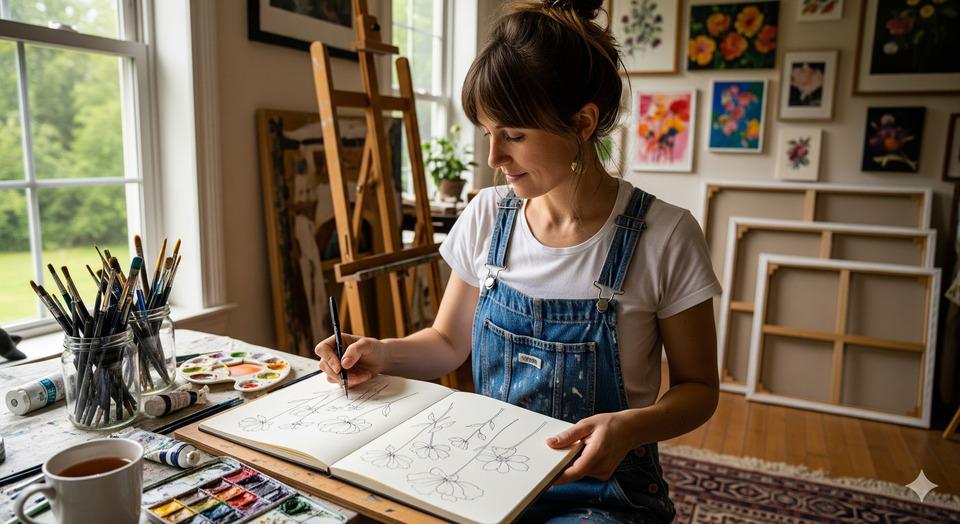
Do you wish you could add a touch of whimsy to your journal or greeting cards but feel like you're not an artist? Drawing simple flowers is an easy, low-pressure way to bring a creative spark to your everyday life. This guide will show you how to let go of perfection and embrace the joy of sketching, proving that anyone can create beautiful, hand-drawn designs.
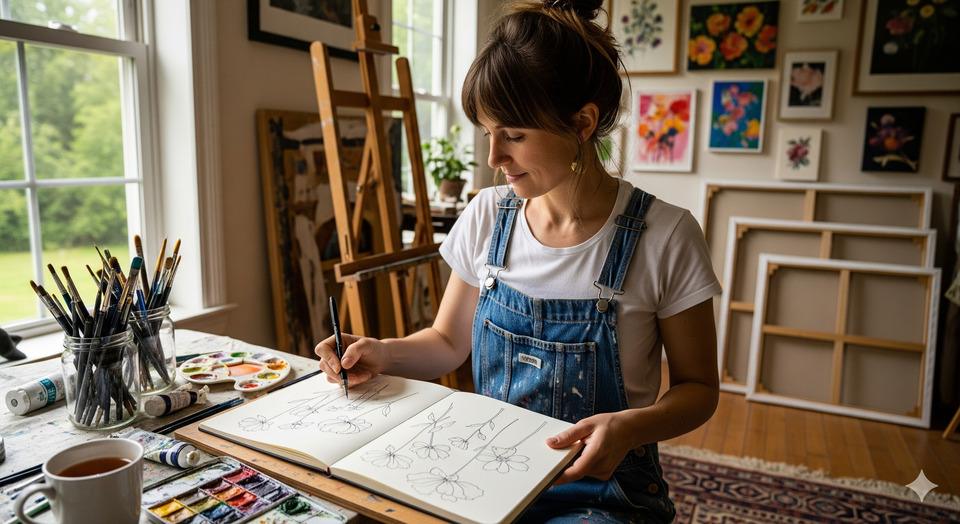
Honestly, who hasn't stared at a blank page, pen in hand, and wished they could just... make something pretty? You know the kind. That feeling when you see someone's journal filled with whimsical little drawings, or a greeting card with a sweet, hand-drawn floral design, and you think, "I could never do that."
Here’s the thing: you totally can.
Drawing flowers doesn't have to be a complicated, years-of-art-school kind of endeavor. It's about letting go, playing with shapes, and embracing the joy of a simple sketch. Whether you're a seasoned creative looking for a new hobby or a complete beginner who hasn't picked up a pencil since grade school, learning to doodle simple flowers is a fantastic way to add a personal touch to everything from your bullet journal to a plain old envelope.
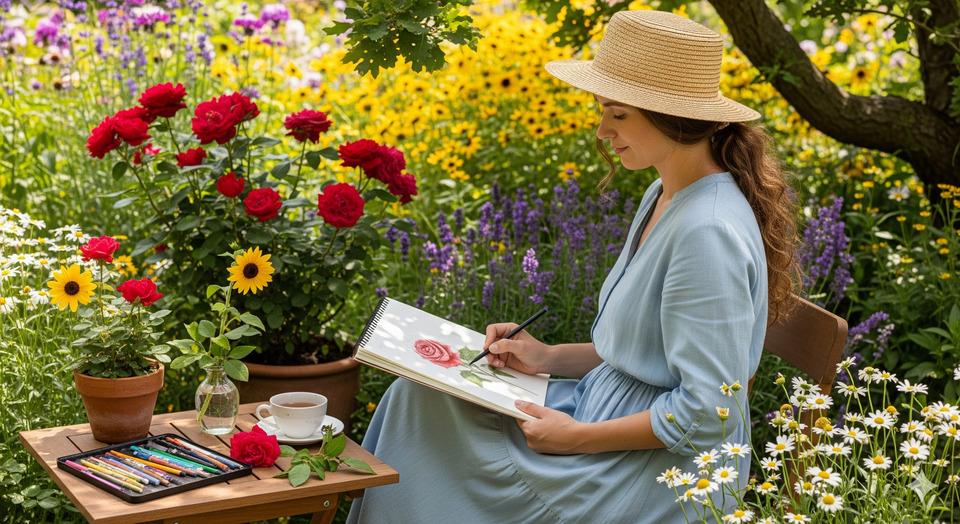
Think about it: when you give someone a store-bought card, it's a nice gesture, but when you give them one you’ve decorated with your own two hands, that's a connection. It’s a little piece of you, of your time and effort. Drawing, especially something as forgiving as a doodle, is a deeply therapeutic process. It's a form of active mindfulness that lets you switch off your brain from the endless chatter of daily life and just focus on a few lines and shapes.
I mean, the whole point of a doodle is that it's not supposed to be perfect. The lines can be a bit wobbly, the petals can be lopsided, and the proportions can be… let's just say, "abstract." And that’s the beauty of it, isn't it? It has personality. It's unique. It's yours. Just like us, right? We're all a little lopsided, a little imperfect, but that's what makes us interesting.
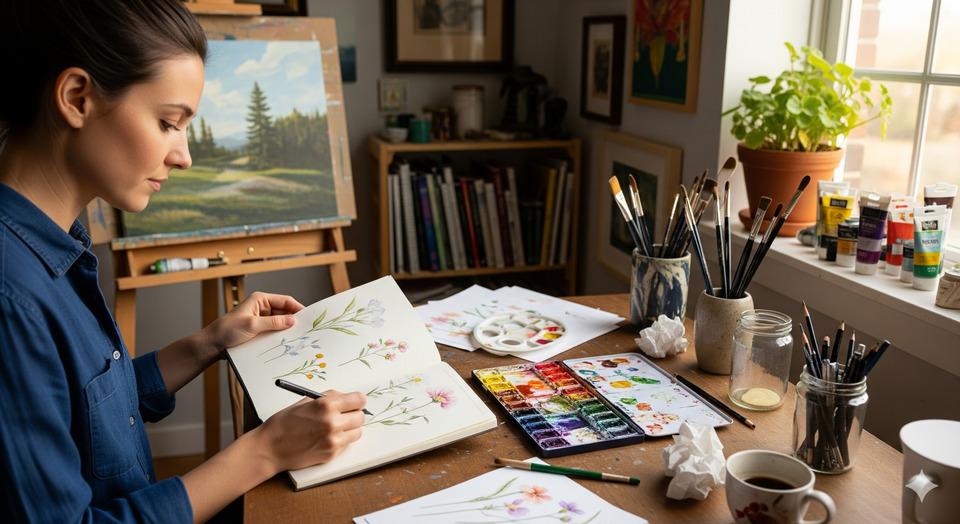
The secret to a great doodle is to break down complex shapes into their most basic components. A flower, for instance, isn't some mythical, hard-to-replicate object. It's just a few circles, a couple of tear-drop shapes, and some lines. That's it. It’s the art of seeing less, not more.
Let's start with a classic: the daisy. You'll see this one in countless bujos and planners for a reason—it's super easy and surprisingly versatile.
First, draw a small circle. This is your center, or as we call it in the biz, the pistil. Next, draw a series of long, skinny ovals radiating out from that center circle. These are your petals. Now, connect the whole thing to a short, straight line for the stem. See? You've already got a flower. To make it a little more interesting, you can add a leaf or two to the stem, maybe giving it a slight curve to make it look like it's swaying in a breeze.
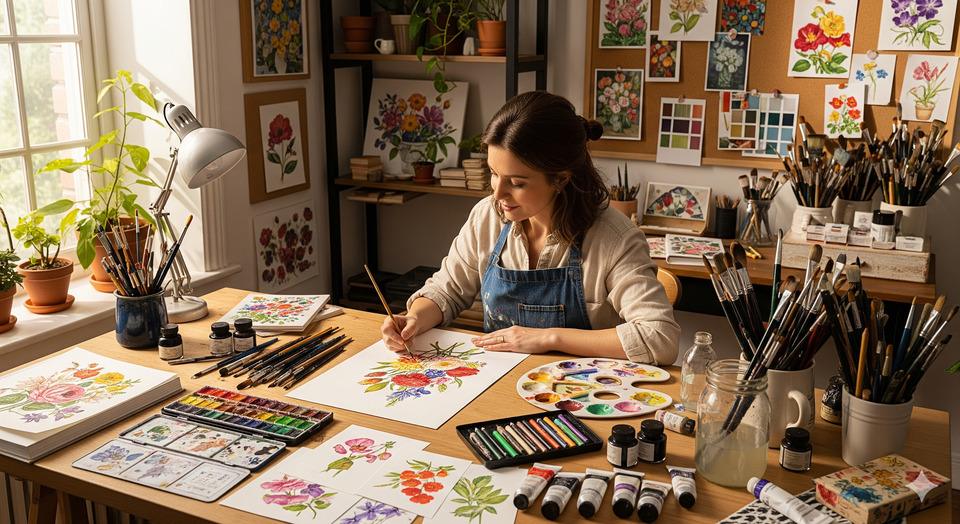
A lot of people get hung up on needing "the right gear." Honestly, you just need a pen and some paper. But if you want to get a little more serious about your floral designs, there are some great tools that can make the process even more fun.
Fineliner Pens: Brands like Sakura Pigma Micron or Faber Castell are popular for a reason. They have a fine, consistent line that's perfect for delicate details. They come in different sizes, so you can mix and match to create some cool effects.
Mechanical Pencils: These are great for sketching out your design before you commit to ink. It’s like a safety net, allowing you to erase and adjust before you make it permanent.
Digital Tools: If you're into digital art, an app like Procreate is a game-changer. You can play with different brushes that mimic watercolors or messy ink, and you can undo your mistakes with a single tap. It's a fantastic way to experiment with color and style without worrying about wasting paper.
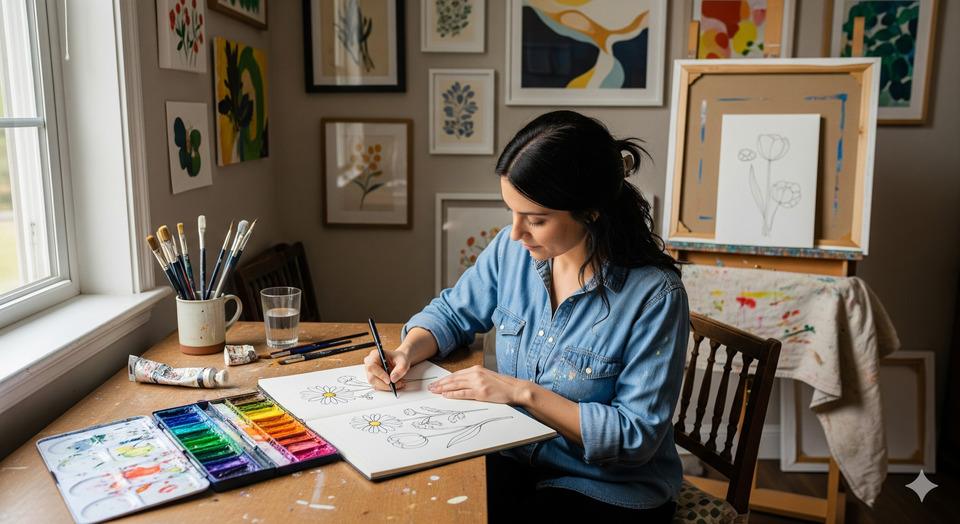
Some of the most popular doodle flowers are a bit more intricate but still incredibly simple once you know the secret. Take the tulip, for instance. It's really just a couple of connected “U” shapes with a rounded “V” at the top. The rose is even simpler: just a small spiral in the center, with C-shaped or half-circle petals radiating out around it. No need to get fancy.
And here’s a pro tip: don’t feel pressured to draw an entire bouquet at once. You can scatter different wildflowers across a page for a more whimsical feel. Mix a few daisies with some simple, leafy vines and a couple of abstract circles to fill in the space. The result looks so much more complex than the sum of its parts. It's a bit like a good story, isn't it? All the little details—the tangents, the side plots—come together to create a richer picture.

You can't go wrong with adding a bold outline. A thicker outline around your doodle can give it a sense of structure and make it really pop off the page. Or, if you're feeling brave, add some soft shading with a gray pencil or a second fineliner. You'd be surprised how much dimension a few lines can create.
Yes, that is completely normal—and it’s a good thing! That slight wobble or unevenness is exactly what gives a hand-drawn doodle its character. It's the little "imperfections" that make your work feel truly unique and human. Don’t try to make it perfect; try to make it yours.
Absolutely! Doodled flowers can be used for DIY greeting cards, custom envelopes for a special letter, as a border for a handwritten recipe, on gift tags, or even for personalizing a sketchbook cover. You can take this in so many directions.
At the end of the day, doodling is a joyful pursuit. It’s a way to quiet the mind, express yourself, and add a little bit of beauty to your everyday life. So grab a pen, a piece of paper, and just start. Forget about whether it’s "good enough." It is, simply because you made it. That's all that matters.
· 6 min read
Ranunculus flower meaning explained: its symbolism of charm and radiance, what each color says, the Persian and coyote legends, and when to give it.
· 6 min read
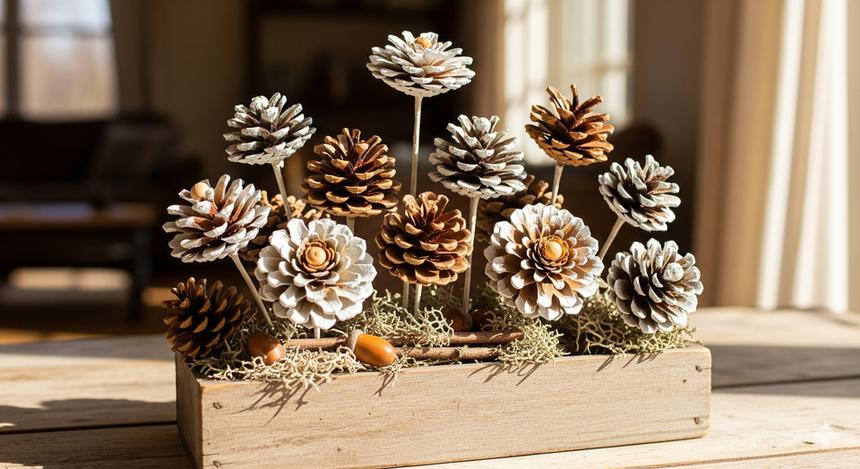
Wish you could have a beautiful floral arrangement that lasts forever? This guide will show you how to transform simple pinecones into stunning, year-round flowers. Learn how the natural shape of a pinecone can be crafted into a rustic yet elegant bloom, perfect for adding a touch of nature to your home without the hassle of watering.
· 5 min read
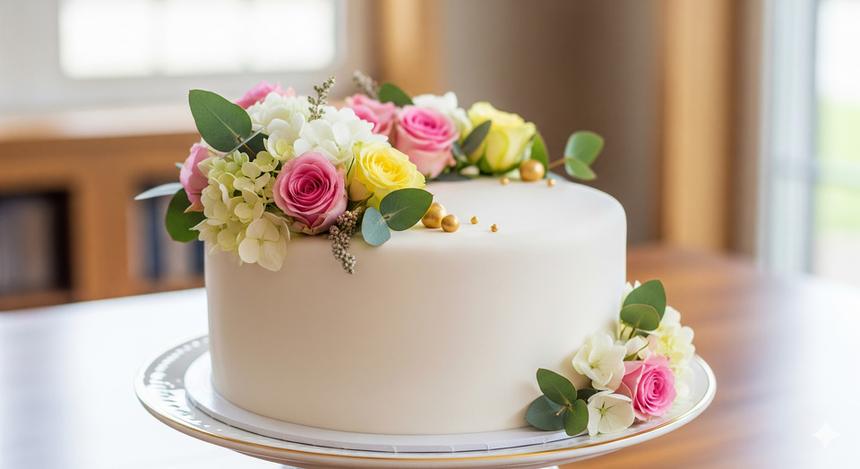
Want to add a magical touch to your next cake with fresh flowers? This guide will show you how to safely and beautifully adorn your baked creations with blooms. Learn the essential tips and tricks to ensure your floral cake is not only stunning but also completely safe to eat.